
Healthcare Cold-Chain Cybersecurity in 2026: Protecting Connected Refrigeration Systems From Cyberattacks
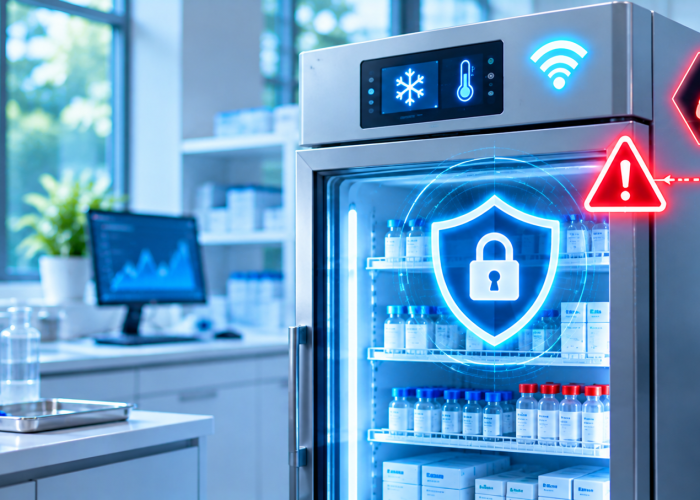
Healthcare cold-chain cybersecurity is becoming an essential part of protecting patient care as hospitals, clinics, pharmacies, and laboratories increasingly depend on connected refrigeration systems. While cybersecurity discussions often focus on ransomware, patient records, and email security, temperature-monitoring devices can introduce equally important operational risks. A compromised refrigeration controller could affect the storage conditions of vaccines, medications, blood products, or laboratory materials, potentially disrupting healthcare services.
On November 5, 2026, the Cybersecurity and Infrastructure Security Agency (CISA), Federal Bureau of Investigation (FBI), Department of Health and Human Services (HHS), Department of Agriculture (USDA), and Department of Transportation (DOT) issued a joint warning about malicious cyber activity targeting industrial refrigeration and cold-chain monitoring systems worldwide. The agencies identified healthcare and public health among the critical infrastructure sectors that rely on these technologies. Their warning highlights how cyberattacks can affect physical equipment and essential supplies, not just digital information.
For healthcare organizations across the United States, the announcement raises an important question: Can your clinic maintain safe storage conditions if a connected refrigeration system is compromised? Understanding which devices are connected, who controls them, and how unauthorized changes can be detected is essential for reducing operational risk. At Tempest Healthcare IT, we recommend integrating connected equipment security into broader healthcare cybersecurity assessments and business continuity planning.
What Is Healthcare Cold-Chain Cybersecurity?
Healthcare cold-chain cybersecurity refers to protecting the connected devices, software, networks, and monitoring systems responsible for maintaining appropriate temperatures during the storage and transportation of temperature-sensitive medical products. These systems may support vaccine refrigeration, pharmaceutical storage, laboratory supplies, and other materials requiring controlled environmental conditions. Their reliability helps healthcare organizations maintain product integrity and operational continuity.
Modern refrigeration systems may include electronic temperature controllers, remote monitoring applications, automated alerts, and vendor-managed connectivity. These technologies allow authorized personnel to monitor conditions, adjust equipment settings, and receive notifications when temperatures move outside approved ranges. However, network connectivity can also introduce opportunities for unauthorized access when devices are improperly configured or inadequately maintained.
Unlike traditional IT systems, refrigeration controllers belong to the broader category of operational technology (OT). OT systems interact with physical processes, meaning cybersecurity failures can affect equipment behavior and environmental conditions. Protecting these systems requires coordination among IT personnel, facilities teams, clinical staff, and equipment manufacturers.
What Changed in CISA’s November 2026 Refrigeration Security Warning?
The November 5 federal advisory warned that malicious actors were targeting vulnerable or internet-accessible refrigeration controllers globally. According to the agencies, attackers may exploit authentication weaknesses, software vulnerabilities, and insecure configurations to manipulate equipment settings. These activities can interfere with normal refrigeration operations and create potentially serious consequences.
One concern involves attackers remotely changing temperature settings or forcing equipment into prolonged heating or defrost cycles. Such manipulation could damage stored products, reduce equipment lifespan, or create physical safety hazards. The agencies also warned that attackers could interfere with temperature visibility, preventing operators from accurately monitoring current conditions.
The advisory specifically discussed activity affecting electronic temperature controllers and commercial refrigeration systems in retail grocery and cold-storage environments. Healthcare organizations were included because similar technologies support medical supply chains and temperature-sensitive healthcare products. The warning does not establish that every healthcare refrigeration system has been compromised.
Federal agencies encouraged organizations to identify internet-exposed controllers, strengthen authentication, remove unnecessary remote access, and apply available updates. They also recommended separating operational technology from business networks and reviewing monitoring capabilities. These measures can help reduce the opportunities available to attackers while supporting safer equipment operation.
Why Refrigeration Cyberattacks Matter to Healthcare Clinics
Healthcare refrigeration systems support products that may become unsuitable for use when stored outside approved temperature conditions. Vaccines, certain medications, diagnostic materials, and blood products can have specific storage requirements established by manufacturers or applicable clinical guidance. Unexpected temperature changes may therefore require product assessment before continued use.
Consider a hypothetical outpatient clinic that discovers its temperature-monitoring dashboard is unavailable before scheduled appointments. Staff may need to verify storage conditions through an approved alternative process and determine whether affected products remain suitable for use. Even without confirmed malicious activity, the disruption can create additional work and uncertainty.
A cybersecurity incident involving refrigeration can also affect several departments simultaneously. Facilities personnel may investigate equipment behavior, clinical staff may evaluate stored products, and IT teams may examine network connections or monitoring applications. Coordinated responsibilities help organizations respond without unnecessary delays.
For small and medium-sized healthcare practices, the consequences can be especially disruptive when only one refrigerator supports a particular service. An equipment failure or monitoring interruption may require temporary adjustments to scheduling, storage, or clinical workflows. This makes refrigeration security an important part of healthcare operational resilience.
Four Essential Steps to Strengthen Healthcare Cold-Chain Cybersecurity
Step 1: Identify Connected Refrigeration Systems and Assign Ownership
The first step is understanding which refrigeration systems are connected to organizational networks or external services. Healthcare administrators should work with facilities teams and IT personnel to identify temperature controllers, monitoring applications, network connections, and vendor support arrangements. This inventory should include equipment supporting vaccines, medications, laboratory materials, and other temperature-sensitive products.
Each system should have a clearly designated operational owner and technical contact. The operational owner is responsible for equipment use and storage requirements, while the technical contact coordinates network access, software updates, and cybersecurity concerns. A backup contact should also be identified for emergencies or after-hours incidents.
Healthcare organizations should document how each refrigeration system communicates with other applications and services. This includes remote monitoring dashboards, automated notification platforms, vendor maintenance connections, and internal network dependencies. Understanding these relationships helps identify where unauthorized access could occur.
Vendor accountability is an important part of this process. Clinics should determine whether equipment manufacturers or maintenance contractors retain remote access after installation. Any unnecessary permissions should be reviewed with the responsible technical personnel before changes are made.
Step 2: Restrict Remote Access and Secure Refrigeration Controllers
The second step involves reducing unnecessary exposure to public networks and unauthorized users. Federal agencies recommend removing refrigeration controllers and related control systems from direct internet access wherever possible. Systems requiring remote connectivity should use appropriately secured access methods.
Network segmentation is another important safeguard for healthcare operational technology. Separating refrigeration controllers from ordinary business networks can help limit unauthorized communication between systems. Network changes should be planned with equipment specialists to avoid disrupting essential monitoring or control functions.
Default passwords and weak credentials create additional security risks. Healthcare organizations should replace manufacturer-default credentials, establish strong authentication procedures, and restrict access to authorized personnel. Phishing-resistant multifactor authentication should be considered where supported and operationally appropriate.
Remote maintenance should follow a documented approval process. Organizations should identify who requests access, who authorizes it, and how maintenance activity is recorded. Access should be restricted or disabled when the approved work is complete.
Firmware and software updates also require regular attention. Healthcare IT teams should coordinate with manufacturers to identify available security patches and determine whether equipment remains supported. Unsupported legacy controllers should be evaluated for replacement or other risk-reduction measures.
Step 3: Strengthen Temperature Monitoring, Alerts, and Security Visibility
The third step focuses on detecting unusual equipment behavior before it creates a larger operational problem. Healthcare refrigeration systems should have temperature-monitoring procedures appropriate to the products they store. Monitoring should identify deviations from approved operating ranges and notify responsible personnel.
Federal guidance recommends reviewing safe temperature setpoint limits and establishing alerts for unexpected changes. Where supported by the equipment, appropriate limits can help prevent controllers from operating outside defined conditions. These settings should be established with qualified facilities personnel and equipment manufacturers.
Cybersecurity monitoring should complement temperature monitoring. Organizations should review available logs for unauthorized configuration changes, unexpected remote connections, and unusual administrative activity. These records can help investigators determine whether an incident resulted from equipment malfunction, human error, or malicious activity.
Alerts are only useful when they reach someone who can respond. Healthcare organizations should verify that notifications are delivered to designated personnel and that backup contacts are available when primary responders cannot act. Testing should follow manufacturer guidance and avoid unsafe manipulation of live equipment.
A practical exercise involves sending an approved test notification and confirming the response process. The designated employee should understand how to assess the alert, contact technical support, and escalate concerns when necessary. Documenting the results helps identify weaknesses in communication and accountability.
Step 4: Prepare for Refrigeration Incidents and Verify Recovery
The fourth step involves establishing procedures for responding to refrigeration disruptions, including suspected cyberattacks. Healthcare organizations should define how staff will assess storage conditions when monitoring becomes unavailable or equipment behaves unexpectedly. These procedures should align with applicable clinical guidance and manufacturer requirements.
A response plan should identify who evaluates stored products and who can authorize operational changes. Clinical and pharmacy personnel may need to determine whether supplies should be quarantined, transferred, or withheld from use. IT and facilities teams should investigate technical causes without independently making clinical suitability decisions.
Incident-response planning should include alternative monitoring procedures. If a digital dashboard becomes unavailable, staff should know which approved methods can be used to assess current conditions and review available temperature records. Organizations should avoid assuming that products remain safe simply because refrigeration equipment appears operational.
Cybersecurity teams should preserve relevant evidence when suspicious activity is detected. Useful information may include access logs, configuration changes, equipment alerts, and vendor communications. Investigations should distinguish confirmed unauthorized activity from ordinary equipment failures.
Recovery requires more than restoring network connectivity or restarting a monitoring application. Facilities personnel should verify that equipment operates within approved parameters, while clinical teams assess affected supplies according to applicable requirements. IT personnel should confirm that identified security weaknesses have been addressed before normal remote access is restored.
The Connection Between Refrigeration Security and Patient Safety
Healthcare cybersecurity is often associated with protecting electronic health records and confidential patient information. However, connected equipment can influence patient care even when it stores no protected health information. A compromised temperature controller may create operational consequences through changes to physical storage conditions.
This is particularly important for organizations that maintain vaccines, temperature-sensitive medications, or diagnostic supplies. Unexpected refrigeration problems may require additional inventory checks, product evaluation, or temporary service adjustments. The consequences depend on the equipment involved and the products being stored.
Healthcare leaders should therefore evaluate connected equipment according to the potential impact of failure. Systems that support essential clinical functions deserve appropriate cybersecurity attention regardless of whether they contain patient records. This approach connects cybersecurity risk management with practical patient safety considerations.
Healthcare Cold-Chain Cybersecurity and HIPAA Readiness
The HIPAA Security Rule focuses on protecting electronic protected health information through appropriate administrative, physical, and technical safeguards. Refrigeration equipment does not automatically fall within HIPAA Security Rule requirements simply because it operates in a healthcare facility. Applicability depends on whether the relevant systems create, receive, maintain, or transmit electronic protected health information.
Nevertheless, connected refrigeration security can be important to an organization’s broader cybersecurity and operational risk management program. Network-connected controllers may share infrastructure with other systems or depend on externally managed services. Healthcare organizations should understand these relationships when evaluating their security posture.
A comprehensive assessment should distinguish patient information risks from equipment availability and product integrity concerns. This helps organizations apply appropriate safeguards without incorrectly treating every operational technology issue as a HIPAA violation. Documented risk reviews can support clearer decision-making and accountability.
Why Small and Medium-Sized Clinics Need Stronger Vendor Coordination
Small and medium-sized healthcare practices often rely on external contractors to install, configure, and maintain refrigeration equipment. These arrangements can create uncertainty about who manages passwords, remote access, firmware updates, and monitoring services. Clear responsibilities are essential when equipment supports critical healthcare supplies.
For medical practices in Miami, South Florida, and throughout the United States, vendor coordination should begin with a review of existing maintenance agreements. Administrators should request confirmation of remote access methods, security update procedures, and available support during incidents. Written verification provides a more reliable record than informal assurances.
Healthcare organizations should also involve purchasing and installation teams before new equipment becomes operational. Security requirements can be incorporated into vendor selection, configuration reviews, and acceptance testing. Addressing these issues early may reduce the need for disruptive changes later.
A Practical Cold-Chain Cybersecurity Checklist for Healthcare Organizations
Healthcare administrators can begin with the following actions:
- Identify connected refrigeration controllers and monitoring systems.
- Assign operational, technical, and backup contacts.
- Confirm whether any controllers are accessible from the public internet.
- Review vendor remote access and remove unnecessary permissions.
- Replace default passwords and strengthen authentication.
- Coordinate firmware updates with equipment manufacturers.
- Separate operational technology from business networks where appropriate.
- Verify approved temperature limits and alerting procedures.
- Test notification delivery and after-hours escalation.
- Document alternative monitoring and incident-response procedures.
- Review recovery arrangements and assign corrective actions.
These activities should be coordinated with qualified equipment specialists and clinical personnel. Changes to refrigeration controls must account for manufacturer requirements and the safety of stored products. Regular reviews help organizations maintain visibility as equipment and support arrangements change.
How Tempest Healthcare IT Supports Healthcare Cybersecurity Readiness
At Tempest Healthcare IT, we help healthcare organizations identify cybersecurity weaknesses, validate exposure, and prioritize practical improvements across supported digital environments. Our services include vulnerability assessments, HIPAA readiness reviews, website security validation, controlled remediation, and follow-up security assurance. These activities can support the broader security program surrounding connected healthcare operations.
Our three-phase security approach begins with Security Validation, where relevant external-facing systems, administrative access, and supporting configurations are reviewed within an agreed scope. Security Remediation focuses on addressing prioritized weaknesses through controlled changes and documentation. The 30-Day Security Assurance phase provides follow-up monitoring and verification of selected improvements.
For healthcare organizations concerned about connected refrigeration systems, Tempest Healthcare IT can help evaluate related cybersecurity exposure within its supported service scope. Equipment-specific control changes, refrigeration performance testing, and clinical storage decisions should remain coordinated with qualified facilities personnel, manufacturers, and clinical specialists. This collaborative approach helps ensure that cybersecurity improvements support rather than disrupt essential operations.
Schedule a free healthcare cybersecurity consultation with Tempest Healthcare IT to discuss your organization’s security priorities and identify where vulnerability validation and remediation may provide value. Our team can work alongside existing IT personnel and relevant service providers to support evidence-based security improvements. Strengthening these foundations can help reduce avoidable exposure across healthcare digital environments.
Final Thoughts
Healthcare cold-chain cybersecurity in 2026 highlights an important shift in how organizations should evaluate connected equipment risks. The November 5 federal warning demonstrates that refrigeration controllers and monitoring systems can become targets of malicious activity, potentially affecting inventory, equipment, and operational continuity. Healthcare leaders should respond by identifying connected systems, restricting unnecessary access, strengthening monitoring, and preparing for disruptions.
Protecting healthcare operations requires collaboration among cybersecurity professionals, facilities personnel, clinical teams, and equipment vendors. Clear ownership, tested procedures, and documented security improvements can help organizations reduce vulnerabilities without introducing unnecessary operational risks. For more insights on healthcare cybersecurity, operational technology security, vulnerability assessments, incident readiness, and protecting patient care, follow Tempest Healthcare IT on LinkedIn.