
CVE-2026-83548: Why Healthcare Organizations Need to Reassess Their Network Edge
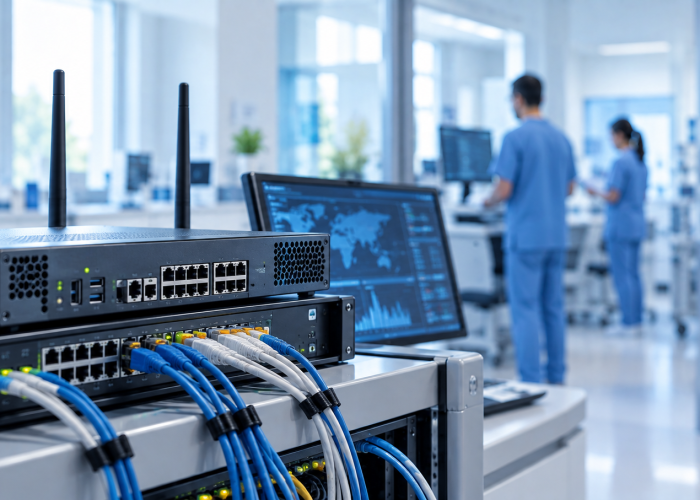
CVE-2026-83548 is a critical reminder that the technologies designed to protect healthcare networks can themselves become high-value attack targets. Healthcare organizations invest in firewalls, VPNs, and secure remote-access appliances because those systems control access to internal environments and support clinicians, administrators, vendors, and distributed operations. When one of those edge systems contains a critical vulnerability, the organization’s protective boundary can become an attacker’s entry point.
That concern became more urgent in early September 2026 when SonicWall disclosed two zero-day vulnerabilities affecting certain SMA1000 Secure Mobile Access appliances. One of them, CVE-2026-83548, is a pre-authentication server-side request forgery flaw with a CVSS score of 10.0. SonicWall indicated that the vulnerabilities were being exploited, and CISA added both CVE-2026-83548 and CVE-2026-83549 to its Known Exploited Vulnerabilities Catalog on September 2, 2026. (Canadian Centre for Cyber Security)
For healthcare organizations, the lesson extends well beyond SonicWall. Internet-facing security appliances, VPN gateways, remote-access portals, and network edge devices should be treated as continuously exposed infrastructure rather than “set and forget” technology. The security tools guarding the front door need the same disciplined vulnerability management as the systems behind them.
What Is CVE-2026-83548?
CVE-2026-83548 affects certain SonicWall SMA1000 Secure Mobile Access appliances. The vulnerability exists in the Appliance Work Place interface and involves a pre-authentication server-side request forgery condition caused by an unintended alternate access path. A remote unauthenticated attacker could potentially exploit the flaw to reach sensitive functionality and perform unauthorized operations. (OpenCVE)
The vulnerability carries the maximum CVSS v3.1 score of 10.0, with no authentication or user interaction required for exploitation according to the published record. That combination makes the flaw especially concerning on systems exposed directly to the public Internet. CISA enrichment also classifies exploitation as active and the technical impact as total. (OpenCVE)
The affected SMA1000 family includes models such as the 6210, 7210, and 8200v running vulnerable platform hotfix versions. Published advisories list 12.4.3-03453 and earlier and 12.5.0-02835 and earlier as affected. (Canadian Centre for Cyber Security)
CVE-2026-83549 Makes the Situation More Serious
The second vulnerability, CVE-2026-83549, affects the SMA1000 Appliance Management Console. It is an OS command injection vulnerability that can allow a remote authenticated administrator to execute arbitrary operating-system commands under specific conditions. The flaw carries a CVSS score of 7.8. (OpenCVE)
Individually, the two vulnerabilities have different prerequisites and attack paths. The concern becomes greater when they are chained. SonicWall reported active exploitation involving the two flaws together, creating a path that could potentially enable remote code execution on affected appliances. (Canadian Centre for Cyber Security)
This is the kind of attack sequence healthcare security teams should pay attention to. Attackers rarely limit themselves to one vulnerability when multiple weaknesses can be combined. Edge-device security therefore depends not only on individual patching, but also on understanding how vulnerabilities interact across the same system.
Why CISA KEV Status Matters
CISA’s Known Exploited Vulnerabilities Catalog is intended to identify vulnerabilities that are not merely theoretical but are known to have been exploited in the wild. CVE-2026-83548 was added to the catalog on September 2, 2026, with CISA’s record noting active exploitation. (OpenCVE)
This distinction should influence healthcare vulnerability prioritization. Security teams may manage hundreds or thousands of findings, and severity scores alone are not enough to determine remediation order. A critical flaw on an isolated internal device and a critical flaw on an Internet-facing remote-access appliance under active exploitation do not represent the same practical risk.
Healthcare organizations should therefore incorporate exploitation intelligence into vulnerability management. CISA KEV status, Internet exposure, exploitability, asset criticality, available privileges, and downstream connectivity all help determine what should be fixed first. Risk-based prioritization is especially important for smaller healthcare organizations with limited remediation capacity.
Why Healthcare Organizations Should Care About Edge Appliances
Healthcare organizations depend heavily on remote connectivity. IT administrators may manage systems from outside facilities, vendors may remotely support EHR integrations, and employees may access cloud resources from multiple locations. Larger systems may connect hospitals, clinics, administrative offices, and remote care environments through shared secure-access infrastructure.
That makes VPN gateways and remote-access appliances attractive targets. They are intentionally reachable from outside the organization and often sit close to authentication systems, management interfaces, and internal networks. If attackers compromise them, the result can provide a strategic foothold for further activity.
NHS England has warned that firewalls and other edge devices are appealing targets precisely because they are Internet-facing. The broader healthcare lesson is simple: edge infrastructure should receive faster attention when critical vulnerabilities emerge because attackers do not need to bypass the perimeter if they can compromise the device enforcing it.
Security Infrastructure Is Still Software
Healthcare organizations sometimes treat security appliances differently from ordinary servers and applications. A firewall or secure-access device may be purchased, installed, configured, and then assumed to remain secure because its purpose is security. That assumption is dangerous.
Security infrastructure still contains operating systems, services, web interfaces, firmware, APIs, and management code. Vulnerabilities can emerge long after deployment, and those flaws can become especially dangerous because the affected systems are trusted and highly connected. Edge devices therefore need inventory, patching, monitoring, lifecycle management, and ownership just like any other critical technology.
The lifecycle of the appliance matters as much as the purchase decision. Healthcare organizations should know the exact version running, when it was last updated, whether the product is still supported, who owns patch responsibility, and whether the device is reachable from the Internet. Without those answers, vulnerability response becomes slower and less reliable.
Patching Is Necessary but Not Always Sufficient
When SonicWall vulnerabilities were disclosed, affected organizations were advised to prioritize applying the vendor’s fixes. That is the correct first step because remediation closes the known vulnerable condition. However, once active exploitation is confirmed, patching alone may not answer whether compromise already occurred.
If an appliance was Internet-facing and vulnerable during the exploitation window, security teams should consider reviewing it for indicators of compromise. Depending on findings and vendor guidance, response may involve re-imaging or redeploying the appliance, resetting credentials, and invalidating authentication tokens. The appropriate response should reflect the actual deployment and available evidence.
This distinction is important across healthcare cybersecurity: patching prevents future exploitation of the known flaw, but it does not prove that previous exploitation did not happen. Vulnerability management and incident investigation serve different purposes. When exploitation is active, organizations may need both.
You Cannot Protect What You Do Not Know Is Exposed
CVE-2026-83548 also highlights the importance of external attack-surface visibility. A healthcare organization may understand its primary EHR, employee workstations, and major cloud applications while having less complete visibility into everything reachable from the public Internet. That gap can become costly during a fast-moving vulnerability event.
Internet-facing assets may include:
- VPN and remote-access appliances
- Firewalls and security gateways
- Patient portals
- Web applications
- Vendor-managed systems
- Cloud infrastructure
- Remote management interfaces
- Legacy servers
- Forgotten domains
- Temporary services
Over time, environments change. Vendors install tools, facilities migrate applications, cloud resources are created, and temporary services sometimes remain online long after their original purpose ends. The external attack surface can therefore grow without leadership realizing it.
Shadow Infrastructure Makes Edge Risk Worse
Unknown Internet-facing infrastructure is especially dangerous because it may not receive routine patching or vulnerability scanning. A forgotten remote-support appliance or legacy VPN gateway can remain reachable even after primary systems have been modernized. Attackers only need one such weak point.
Healthcare organizations should therefore maintain a continuously updated inventory of public-facing assets. External attack-surface monitoring can help identify systems that internal asset lists overlook. This provides an independent view of what attackers can actually see.
The goal is not merely to collect domains and IP addresses. Each asset should have an owner, business purpose, technology version, patch status, and defined retirement process. Unknown exposure should trigger investigation rather than remain another item on a dashboard.
Vulnerability Management Needs to Be Continuous
A vulnerability assessment provides valuable insight at a particular point in time, but technology environments do not remain static. New vulnerabilities are disclosed every day, cloud systems are added, vendors receive new access, and application versions change. A quarterly or annual review alone cannot reflect this pace.
Healthcare organizations should treat vulnerability management as an ongoing process. Internet-facing systems deserve particularly frequent attention because the exposure exists continuously. When a critical, actively exploited vulnerability affects an edge device, the response timeline should shrink dramatically.
The Center for Internet Security has similarly emphasized documented vulnerability-management and remediation processes in response to these SonicWall vulnerabilities. The larger lesson is that patching should not occur as an isolated emergency task; it should be part of an established operational program.
What a Strong Edge Vulnerability Program Looks Like
A healthcare organization should know which Internet-facing systems it operates and which versions they run. Those systems should be scanned regularly, checked against current threat intelligence, and prioritized when exploitation status changes. Remediation should then be independently verified.
A practical process should include:
- Accurate Internet-facing asset inventory
- Software and firmware version tracking
- Continuous or frequent external vulnerability scanning
- CISA KEV monitoring
- Vendor advisory monitoring
- Risk-based patch prioritization
- Ownership for every exposed system
- Post-remediation verification
- Compromise assessment when active exploitation is known
- Decommissioning of unsupported systems
This creates a repeatable response rather than an improvised one. When the next critical edge vulnerability appears, the organization already knows how to identify affected assets and who is responsible for them.
Remote Access Should Follow Zero Trust Principles
VPNs and secure-access appliances are often treated as gateways into trusted internal networks. A stronger architecture limits what users can reach even after they successfully connect. Compromise of an edge appliance should not automatically expose the entire environment.
Remote access should be paired with strong identity controls, multi-factor authentication, least privilege, segmentation, and device validation. Administrative interfaces should receive even stronger restrictions. A remote user should reach only the systems necessary for the approved role.
This approach reduces the blast radius if the edge itself becomes compromised. The goal is to avoid making one security appliance the sole barrier between the Internet and critical healthcare infrastructure. Layered access control is more resilient than perimeter trust alone.
Segment Critical Healthcare Systems
Healthcare organizations should assume that perimeter defenses can eventually fail. Internal segmentation then becomes an important secondary control. If an attacker compromises a remote-access appliance, network boundaries can limit what becomes reachable afterward.
EHR systems, identity infrastructure, backup environments, medical-device networks, administrative systems, and vendor-access segments should not automatically share unrestricted connectivity. Communication should reflect actual business requirements. This creates friction for lateral movement.
Segmentation also makes monitoring more meaningful. Unexpected communication from an edge appliance toward systems it should never access can generate high-value alerts. Strong internal controls turn the edge into one layer rather than the entire defense strategy.
Monitor Edge Devices as High-Value Assets
Edge appliances should generate logs that security teams can actually use. Authentication activity, administrative changes, unusual connections, failed access attempts, and configuration changes all provide valuable context during an incident. A device exposed to the Internet should not operate as an opaque black box.
Logs should be centralized where practical so attackers cannot easily erase all evidence after compromising the device. Security teams should also monitor when expected telemetry suddenly stops. A critical appliance going silent can itself be a warning signal.
Healthcare organizations should integrate edge-device monitoring with SIEM and incident-response processes. These systems are often among the first components attackers interact with, making their telemetry particularly valuable. The closer a system sits to the public Internet, the more important its visibility becomes.
Review Vendor and MSP Responsibilities
Healthcare organizations frequently rely on managed service providers or vendors to operate firewalls, VPNs, and remote-access infrastructure. Outsourcing administration does not eliminate organizational risk. Leadership should understand who is responsible for monitoring advisories, applying emergency patches, investigating compromise, and reporting incidents.
Contracts and service agreements should make those responsibilities explicit. A critical zero-day should not reveal that the healthcare organization and its provider each assumed the other party was handling updates. Patch ownership needs to be clear before an emergency occurs.
Vendor access itself should also be limited. Remote-support accounts should be individually assigned, protected by MFA, monitored, and disabled when no longer needed. Trusted vendor relationships should not become permanent unrestricted pathways into the environment.
Final Thoughts
CVE-2026-83548 is a clear example of why healthcare organizations cannot assume that security infrastructure protects itself. The vulnerability affects Internet-facing SonicWall SMA1000 appliances, carries a CVSS score of 10.0, and has been added to CISA’s Known Exploited Vulnerabilities Catalog following evidence of active exploitation. (Canadian Centre for Cyber Security)
The broader lesson is continuous edge visibility. Healthcare organizations should know every public-facing system, understand who maintains it, prioritize actively exploited vulnerabilities, verify remediation, and investigate possible compromise when the circumstances warrant it. For practical guidance on healthcare vulnerability management, attack-surface security, HIPAA cybersecurity, penetration testing, and cyber resilience, follow Tempest Healthcare IT on LinkedIn: https://www.linkedin.com/company/tempesthealthcareit/
References
[1] SonicWall / CVE Record — CVE-2026-83548
Primary technical information on the pre-authentication SSRF vulnerability, affected versions, and CVSS severity.
CVE-2026-83548 vulnerability details
[2] SonicWall / CVE Record — CVE-2026-83549
Technical details on the authenticated OS command injection vulnerability affecting the SMA1000 Appliance Management Console.
CVE-2026-83549 vulnerability details
[3] Canadian Centre for Cyber Security — SonicWall Security Advisory AV26-872
Confirms the affected SMA1000 versions, active exploitation, and CISA KEV additions.
SonicWall Security Advisory AV26-872
[4] CISA — Known Exploited Vulnerabilities Catalog
CISA’s authoritative catalog for vulnerabilities known to have been exploited in the wild. (kevmap)
CISA Known Exploited Vulnerabilities Catalog
[5] Rapid7 — CVE-2026-83548 Vulnerability Database
Additional technical context on CVE-2026-83548 and affected SonicWall SMA1000 systems.
Rapid7 CVE-2026-83548 analysis
[6] Tempest Healthcare IT — LinkedIn
Healthcare cybersecurity resources covering vulnerability management, attack-surface security, penetration testing, and HIPAA security.
Tempest Healthcare IT on LinkedIn