
Deception Technology in Healthcare: How Cyber Deception Helps Detect Attackers Before They Reach Patient Data
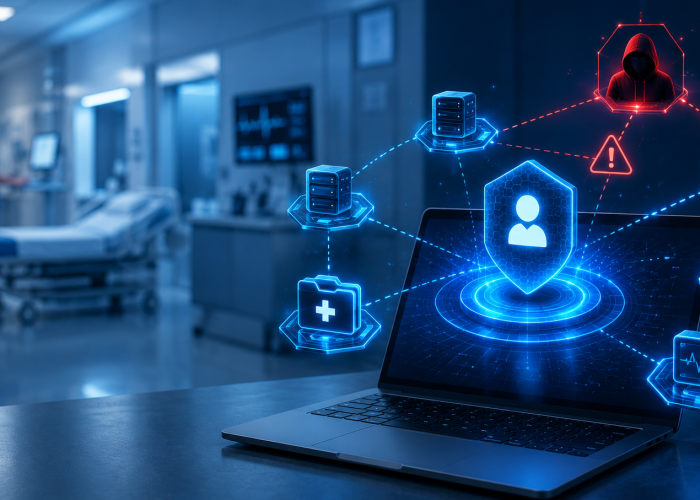
Deception technology in healthcare is becoming an increasingly valuable cybersecurity strategy as ransomware groups and other threat actors adopt more sophisticated methods to infiltrate healthcare networks. Traditional security controls such as firewalls, endpoint protection, multi-factor authentication (MFA), and vulnerability management remain essential, but they primarily focus on preventing attackers from gaining access. Today’s healthcare organizations also need ways to detect adversaries who have already bypassed those defenses and begun exploring the network.
Healthcare providers continue to be among the most frequently targeted industries because of the critical services they deliver and the highly sensitive data they manage. Electronic Health Records (EHRs), diagnostic imaging systems, laboratory platforms, financial applications, and connected medical devices all represent valuable targets for cybercriminals. Even a short disruption to these systems can affect patient care, delay clinical workflows, and increase operational risk.
Modern ransomware attacks rarely begin with immediate encryption. Instead, attackers typically spend days or even weeks quietly gathering information, escalating privileges, identifying high-value systems, and moving laterally across the network before launching the final stage of the attack. Deception technology helps healthcare organizations detect these reconnaissance activities much earlier, improving opportunities to contain threats before significant damage occurs.
Why Modern Healthcare Cyberattacks Are Difficult to Detect
Healthcare cybersecurity has changed dramatically over the past decade. Attackers no longer rely exclusively on noisy malware or obvious intrusion techniques that immediately trigger security alerts. Instead, they increasingly behave like legitimate users while carefully studying their target environments.
After gaining an initial foothold through phishing, stolen credentials, exploited vulnerabilities, or compromised vendor access, attackers often avoid making dramatic changes. Their objective is to remain undetected while learning how the healthcare environment operates. This period of hidden activity is commonly referred to as attacker dwell time.
During dwell time, cybercriminals search for Active Directory servers, privileged administrator accounts, backup infrastructure, file shares, patient databases, cloud resources, and medical devices. Every additional day inside the network gives attackers greater opportunities to identify sensitive systems and prepare for larger attacks.
What Is Deception Technology?
Deception technology is a cybersecurity approach that deliberately introduces realistic but fake digital assets throughout an organization’s environment. These decoy systems appear authentic to attackers performing reconnaissance but serve no legitimate operational purpose. Their primary function is to identify suspicious activity that traditional preventive controls may miss.
Unlike conventional security tools that attempt to block malicious actions, deception technology assumes attackers may eventually gain some level of access. Instead of focusing exclusively on prevention, it creates opportunities to detect unauthorized activity as early as possible. This shift from reactive defense to proactive detection strengthens overall cyber resilience.
The effectiveness of deception technology comes from its simplicity. Legitimate healthcare employees should never interact with these decoy assets during normal business operations. Therefore, almost any interaction with them becomes a high-confidence indicator of potentially malicious behavior.
How Deception Technology Works
Deception technology creates digital resources that closely resemble production systems while containing no operational value. These resources may include servers, databases, credentials, cloud storage, workstations, medical devices, or administrative accounts specifically designed to attract attackers.
When an unauthorized user attempts to access one of these assets, the deception platform immediately generates an alert. Security teams receive valuable information about the attacker’s activity, including the source system, attempted credentials, accessed resources, and movement patterns. This information helps investigators understand how the intrusion is progressing.
Because the decoy assets are intentionally isolated from legitimate business operations, alerts generated through deception technology often have significantly fewer false positives than many traditional monitoring tools. This allows security teams to prioritize investigations more effectively.
What Deception Looks Like in a Healthcare Environment
Healthcare organizations have numerous opportunities to deploy deception technology without affecting patient care or disrupting clinical workflows. Decoys can closely resemble real healthcare infrastructure while remaining completely isolated from production systems. Their realism increases the likelihood that attackers will mistake them for valuable targets.
Examples of healthcare deception assets include:
- Decoy Electronic Health Record databases
- Simulated patient records containing fictional information
- Dummy medical devices
- Fake pharmacy systems
- Honeytoken administrator credentials
- Decoy file servers
- Cloud storage repositories
- Administrative workstations
- Backup servers
- Research databases
These resources function as silent tripwires throughout the healthcare environment. Any attempt to interact with them immediately provides evidence that unauthorized reconnaissance may be occurring.
Why Deception Technology Is Effective Against Ransomware
Ransomware operators rarely know the structure of a healthcare network when they first gain access. Before encrypting files or disrupting operations, they typically spend considerable time identifying the most valuable systems. Their reconnaissance activities often include scanning networks, searching file shares, collecting credentials, and locating backup infrastructure.
Deception technology interrupts this process by presenting attackers with convincing but fake resources. Instead of quietly gathering intelligence, attackers are more likely to reveal themselves by interacting with decoys. This early detection provides defenders with valuable time to investigate and contain the intrusion.
Because legitimate users generally have no reason to access deception assets, security teams can treat most alerts as high-priority events. Early intervention may prevent ransomware from reaching production systems that support patient care.
Reducing Attacker Dwell Time
One of the primary goals of modern cybersecurity is minimizing attacker dwell time. The less time adversaries spend inside an environment, the fewer opportunities they have to expand access, steal data, or deploy ransomware. Detecting intrusions during reconnaissance significantly improves incident response effectiveness.
Healthcare organizations particularly benefit from shorter dwell times because patient care depends heavily on technology availability. Early detection reduces the likelihood that attackers will reach Electronic Health Records, imaging systems, pharmacy applications, laboratory services, scheduling platforms, or identity infrastructure. Protecting these systems supports both operational continuity and patient safety.
Rather than responding after ransomware begins encrypting files, organizations gain opportunities to interrupt attacks before they cause widespread disruption.
Supporting Layered Healthcare Cybersecurity
Deception technology should not be viewed as a replacement for existing cybersecurity controls. Instead, it complements firewalls, endpoint detection and response (EDR), vulnerability management, penetration testing, identity protection, and continuous monitoring. Each control addresses different stages of the cyberattack lifecycle.
A layered security strategy recognizes that no preventive technology can guarantee complete protection. Organizations should therefore prepare for scenarios in which attackers successfully bypass perimeter defenses. Deception technology provides additional visibility during these situations by exposing malicious behavior that might otherwise remain hidden.
Healthcare organizations achieve stronger resilience when preventive, detective, and responsive capabilities work together rather than independently.
Integrating with SIEM and Incident Response
Many healthcare organizations already use Security Information and Event Management (SIEM) platforms to collect and analyze security events across their environments. Deception technology integrates naturally into these systems by providing high-confidence alerts that enrich existing monitoring capabilities. This additional context improves security investigations.
Security analysts can combine deception alerts with endpoint telemetry, authentication logs, threat intelligence, firewall events, and cloud monitoring data. Correlating multiple sources of information helps investigators understand how attackers entered the environment and how far they may have progressed. Faster investigations support faster containment.
Organizations using Security Orchestration, Automation, and Response (SOAR) platforms may also automate portions of their response workflow after deception alerts are generated. Automated isolation, account suspension, or notification processes can reduce response times significantly.
Practical Healthcare Use Cases
Healthcare organizations operate increasingly complex environments that extend beyond traditional hospital networks. Cloud platforms, telehealth systems, remote workers, third-party vendors, research collaborations, and connected medical devices all expand the organization’s attack surface. Deception technology provides visibility across these diverse environments.
Strategically placing deception assets near sensitive systems allows organizations to monitor high-risk areas without interfering with clinical operations. Attackers frequently target privileged administrative environments, financial systems, research platforms, and biomedical engineering networks during lateral movement. Decoys positioned near these assets improve the likelihood of early detection.
Healthcare organizations can tailor deception deployments to match their own infrastructure, regulatory requirements, and threat landscape. This flexibility makes deception technology suitable for organizations of various sizes.
Deception Technology and Healthcare Compliance
Although the HIPAA Security Rule does not specifically require deception technology, it does require covered entities and business associates to implement reasonable safeguards that protect the confidentiality, integrity, and availability of electronic Protected Health Information (ePHI). Early threat detection supports these objectives by helping organizations identify unauthorized activity before patient information is compromised.
Deception technology also complements broader healthcare cybersecurity practices including vulnerability assessments, penetration testing, risk analysis, access control, audit logging, and incident response planning. Organizations that continuously monitor for unauthorized activity strengthen their overall security posture while supporting compliance efforts. Deception should therefore be viewed as another layer within a comprehensive cybersecurity program.
Healthcare organizations should evaluate deception technology alongside other risk management strategies rather than treating it as a standalone solution. Layered security remains the most effective defense against evolving cyber threats.
Building a More Resilient Healthcare Environment
Healthcare technology continues expanding through cloud computing, connected medical devices, artificial intelligence, Internet of Medical Things (IoMT) devices, and remote patient care solutions. While these innovations improve patient outcomes and operational efficiency, they also introduce additional opportunities for attackers. Organizations must therefore evolve their cybersecurity strategies accordingly.
Combining preventive controls with early detection capabilities creates a stronger defensive posture than relying on perimeter security alone. Vulnerability assessments identify weaknesses before attackers exploit them, penetration testing validates existing defenses, continuous monitoring detects suspicious activity, and deception technology exposes adversaries who successfully bypass preventive controls. Together, these capabilities improve organizational resilience.
The future of healthcare cybersecurity depends on layered defenses capable of adapting to increasingly sophisticated threats. Detecting attackers early often makes the difference between a manageable security incident and a large-scale operational disruption.
Final Thoughts
Deception technology in healthcare provides organizations with an effective method for identifying attackers during the earliest stages of an intrusion. By deploying realistic decoy assets throughout clinical environments, healthcare providers gain visibility into malicious reconnaissance that traditional preventive controls may not detect. Early identification allows security teams to contain threats before they reach Electronic Health Records, medical devices, and other mission-critical systems.
No single cybersecurity solution can eliminate every threat, but deception technology strengthens layered defense strategies by reducing attacker dwell time and improving detection accuracy. Combined with vulnerability management, penetration testing, Zero Trust architecture, endpoint protection, and continuous monitoring, it helps healthcare organizations improve cyber resilience while protecting patient safety.
To stay informed about healthcare cybersecurity, HIPAA compliance, ransomware defense, penetration testing, vulnerability management, and practical security strategies for healthcare organizations, follow Tempest Healthcare IT on LinkedIn: https://www.linkedin.com/company/tempesthealthcareit/