
Healthcare Security Exceptions: Why Temporary Access and Configuration Changes Become Long-Term Cybersecurity Risks
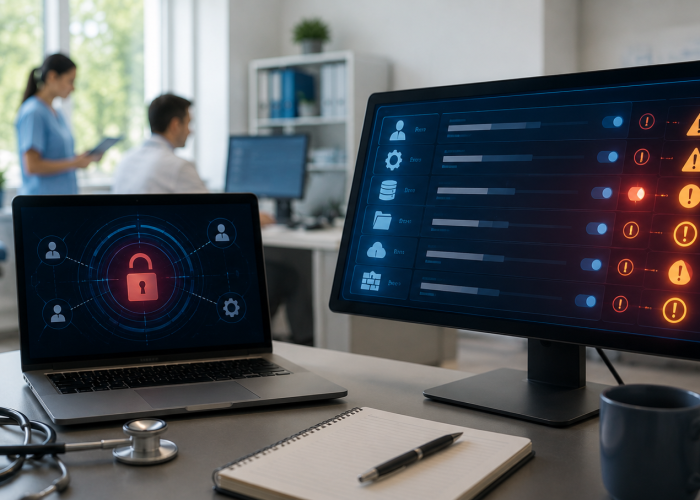
Healthcare security exceptions are an unavoidable part of modern healthcare operations, but they can quietly become significant cybersecurity risks when they remain active longer than intended. IT teams frequently make temporary changes to keep clinical workflows, billing systems, Electronic Health Records (EHRs), and vendor integrations functioning without interruption. While these decisions often solve immediate operational problems, failing to remove or review them can gradually weaken an organization’s overall security posture.
Healthcare organizations constantly balance patient care with technology management. A firewall rule may be temporarily modified so a vendor can troubleshoot an integration, multi-factor authentication (MFA) may be bypassed while an employee replaces a lost phone, or a service account may receive elevated permissions during a software migration. These changes are usually made with good intentions and legitimate business justification.
The challenge begins after the work is complete. Temporary permissions, open network ports, vendor accounts, or cloud configurations are often forgotten as attention shifts to the next operational priority. Over time, these temporary solutions become permanent parts of the environment, creating hidden attack paths that cybercriminals may eventually discover.
Healthcare cybersecurity is not only about preventing unauthorized changes. It is also about making sure authorized changes remain temporary, documented, and properly managed throughout their entire lifecycle.
Why Temporary Security Changes Matter
Healthcare organizations operate in environments where uninterrupted patient care comes first. When systems become unavailable, IT teams must restore functionality as quickly as possible. Under these circumstances, temporary security exceptions often become necessary to resolve urgent operational issues.
Most exceptions begin with a valid purpose. A software vendor may need remote administrative access to troubleshoot an EHR integration, a temporary firewall rule may allow secure file transfers during a migration, or additional administrator privileges may be granted to complete a critical software deployment. These actions help maintain clinical operations while minimizing downtime.
The cybersecurity risk is rarely the initial decision itself. The greater risk is allowing these temporary changes to remain active indefinitely after the original business need has disappeared.
Understanding Configuration Drift
Healthcare organizations typically establish approved security baselines that define how servers, workstations, firewalls, cloud services, applications, identity systems, and network devices should be configured. These baselines help ensure consistency across the technology environment while reducing unnecessary exposure to cyber threats. Maintaining those approved configurations is a fundamental component of healthcare cybersecurity.
Configuration drift occurs when production systems gradually move away from these approved security baselines. Some changes result from planned maintenance, while others occur during emergency troubleshooting, software upgrades, vendor support activities, or manual administrative changes. Over time, these small deviations accumulate and create security gaps that are difficult to identify without continuous monitoring.
Because configuration drift develops gradually, organizations may not immediately recognize how far their environment has diverged from its intended state. A single change may appear insignificant, but dozens of undocumented exceptions across multiple systems can substantially increase cyber risk.
Common Examples of Healthcare Security Exceptions
Many configuration changes appear harmless when viewed individually. The real concern arises when these changes remain active without documentation, ownership, or periodic review. Attackers often search for these forgotten exceptions because they provide opportunities to bypass stronger security controls.
Common examples include:
- A remote access account that remains active after vendor support ends
- Administrator privileges retained after a project is completed
- A disabled security control that is never re-enabled
- A test database remaining accessible from the internet
- Legacy encryption settings left unchanged after upgrades
- Development accounts continuing to function in production
- Unused services or network ports remaining enabled
- Cloud resources modified outside approved deployment processes
Each example may appear minor in isolation. Together, they can create pathways into patient records, billing systems, identity services, backups, and other critical healthcare infrastructure.
Why Healthcare Environments Are Especially Vulnerable
Healthcare technology environments change continuously. Hospitals, physician practices, ambulatory surgery centers, laboratories, imaging facilities, and medical billing organizations rely on numerous third-party vendors, cloud providers, medical devices, and remote users to support daily operations. Every integration introduces new access requirements and configuration changes.
Operational urgency also influences decision-making. When clinical workflows stop functioning, restoring patient care understandably becomes the highest priority. Under these circumstances, documenting temporary changes or establishing expiration dates may receive less immediate attention.
The result is an environment where temporary exceptions accumulate faster than they are removed. Without formal governance, organizations gradually lose visibility into which security exceptions remain active and whether they still serve a legitimate business purpose.
The Hidden Risks of Forgotten Exceptions
The greatest danger of healthcare security exceptions is not that they exist—it is that they remain unmanaged. Many organizations cannot easily identify who approved a particular firewall rule, when a vendor account was created, or why administrative privileges were granted months earlier. These unanswered questions create uncertainty during both security reviews and incident investigations.
Forgotten exceptions frequently lack essential governance elements, including:
- A documented business justification
- An assigned owner
- Security and privacy review
- Defined scope
- Expiration date
- Compensating controls
- Closure verification
- Periodic reassessment
Without these safeguards, temporary access quietly becomes permanent trust.
A Realistic Healthcare Scenario
Imagine a medical practice experiencing problems with its EHR-to-billing integration. The software vendor requests temporary remote administrative access so engineers can investigate and resolve the issue. The clinic approves the request for two days, and the integration begins working again.
Several months later, no one remembers to disable the remote support account. During that time, the vendor experiences a credential compromise affecting one of its employees. The attacker discovers the still-active administrative account and successfully connects to the healthcare organization’s network.
The original decision to provide temporary access was reasonable. The failure occurred because temporary access quietly became permanent access after the approved support window ended.
Why Annual Security Reviews Are Not Enough
Annual cybersecurity assessments remain valuable, but healthcare environments evolve far more quickly than yearly review cycles. New applications are deployed, employees change roles, cloud services are expanded, vendors receive temporary access, and emergency troubleshooting introduces new configuration changes almost every week. Waiting months to discover forgotten exceptions provides attackers with unnecessary opportunities.
Continuous monitoring allows organizations to identify configuration drift much sooner. Rather than discovering outdated firewall rules or excessive privileges during the next annual assessment, security teams receive visibility as changes occur. This proactive approach significantly reduces the window of exposure.
National cybersecurity guidance also supports maintaining secure baseline configurations through ongoing monitoring, documented change management, and continuous review rather than relying solely on periodic audits. Maintaining visibility into security configurations should become an ongoing operational process.
Building an Effective Healthcare Security Exception Process
Healthcare organizations do not need to eliminate every temporary security exception. Instead, they should establish structured processes that govern each exception from initial approval through final closure. Every temporary change should have a clearly defined lifecycle.
An effective security exception should include:
- A documented business justification
- An accountable owner
- Clearly defined scope
- Security and privacy impact review
- Appropriate compensating controls
- Automatic expiration date
- Continuous monitoring
- Closure verification
Following these principles helps organizations maintain operational flexibility without sacrificing long-term cybersecurity.
The Value of Automation
Manual tracking becomes increasingly difficult as organizations manage hundreds of systems, cloud resources, firewall rules, vendor accounts, and identity platforms. Security exceptions often become scattered across help desk tickets, email conversations, spreadsheets, and infrastructure management tools. Automation helps centralize this information while improving consistency.
Configuration monitoring tools can compare production systems against approved security baselines and immediately identify deviations. Rather than relying on human memory, organizations receive automated visibility whenever unauthorized changes occur. This significantly reduces the likelihood that forgotten exceptions remain active indefinitely.
Automation may help organizations:
- Detect newly exposed cloud resources
- Identify open or modified network ports
- Discover unauthorized administrator accounts
- Monitor disabled security controls
- Detect configuration changes outside approved workflows
- Restore approved configurations
- Notify security teams of unauthorized changes
- Preserve previous configurations for rollback
Automation should support human decision-making rather than replace it. Legitimate operational changes still require thoughtful review and documented approval.
Healthcare Security Exceptions and HIPAA Compliance
Although the HIPAA Security Rule does not specifically require a product called “configuration drift management,” it does require covered entities and business associates to evaluate risks affecting electronic Protected Health Information (ePHI). Organizations are expected to understand whether their security safeguards remain properly configured and effective over time. Temporary security exceptions therefore become part of the broader risk management process.
An undocumented firewall rule, excessive administrator permission, forgotten remote-access account, or insecure cloud configuration may all increase risk to ePHI. Organizations should be able to demonstrate how changes are reviewed, authorized, monitored, and eventually removed. Documentation becomes particularly valuable during audits, investigations, or incident response activities.
Strong governance supports both cybersecurity and HIPAA compliance. Organizations that maintain accurate records of temporary security changes can more easily demonstrate responsible risk management and continuous oversight.
Questions Healthcare Leadership Should Be Asking
Executive leadership plays an important role in ensuring healthcare security exceptions receive appropriate oversight. While technical teams manage the details, leadership should understand whether governance processes are functioning effectively. Asking the right questions helps reveal hidden risk before it becomes a security incident.
Healthcare leaders should consider asking:
- How many temporary security exceptions are currently active?
- Who owns each exception?
- When does each exception expire?
- Have expired permissions been removed?
- Are firewall rules periodically reviewed?
- How is configuration drift detected?
- What evidence demonstrates that secure baselines have been restored?
If these questions cannot be answered confidently, the organization may be carrying unnecessary cybersecurity risk.
Final Thoughts
Healthcare security exceptions are often necessary to support patient care, vendor support, software upgrades, and emergency troubleshooting. The true cybersecurity challenge is ensuring those temporary changes remain temporary through proper documentation, monitoring, ownership, and expiration. Strong governance prevents short-term operational decisions from becoming long-term security liabilities.
Configuration drift rarely results from a single major mistake. Instead, it develops gradually through small changes that individually appear harmless but collectively weaken an organization’s security posture. Continuous monitoring, structured exception management, and automated configuration oversight help healthcare organizations maintain stronger defenses while supporting HIPAA compliance and patient trust.
To stay informed about healthcare cybersecurity, HIPAA security best practices, vulnerability management, penetration testing, cloud security, and practical guidance for protecting healthcare organizations, follow Tempest Healthcare IT on LinkedIn: https://www.linkedin.com/company/tempesthealthcareit