
Protecting Patient Portal Security: Defending Against XSS and CSRF Attacks in Healthcare
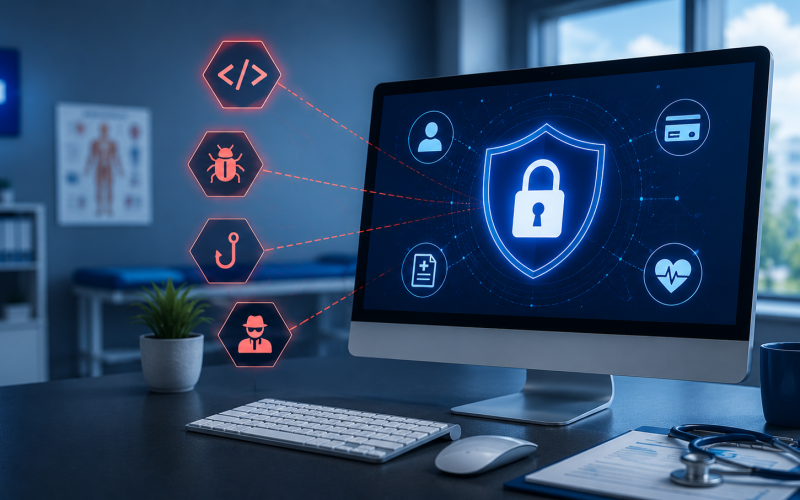
Patient portal security has become one of the most important priorities for hospitals, physician practices, specialty clinics, ambulatory surgery centers, and healthcare organizations across the United States. As digital healthcare services continue expanding through patient portals, telehealth platforms, online scheduling systems, and mobile healthcare applications, cybercriminals are increasingly targeting these web applications as entry points to sensitive patient information. Protecting these systems is no longer simply an IT responsibility—it is essential for maintaining patient trust, ensuring HIPAA compliance, and supporting uninterrupted patient care.
Healthcare organizations have invested heavily in Electronic Health Records (EHRs), cloud-based healthcare applications, and digital patient engagement platforms. These technologies improve access to care, simplify administrative processes, and allow patients to communicate with providers more conveniently than ever before. However, every online portal also expands an organization’s attack surface, creating new opportunities for attackers to exploit web application vulnerabilities.
Much of today’s cybersecurity conversation focuses on ransomware, phishing, and identity theft. While those threats remain serious, web application vulnerabilities often receive far less attention despite their ability to compromise patient accounts without ever deploying malware. Two of the most dangerous web application attacks affecting healthcare organizations are Cross-Site Scripting (XSS) and Cross-Site Request Forgery (CSRF), both of which can lead to patient portal hijacking and unauthorized access to Protected Health Information (PHI).
Why Patient Portal Security Matters More Than Ever
Patient portals have transformed healthcare by giving patients secure online access to their medical information. Individuals can review laboratory results, schedule appointments, refill prescriptions, pay bills, exchange secure messages with providers, and manage their healthcare from virtually anywhere. These conveniences have significantly improved patient engagement and operational efficiency throughout the healthcare industry.
At the same time, patient portals have become attractive targets for cybercriminals. Unlike internal clinical systems that remain protected behind organizational networks, patient portals are intentionally accessible through the public internet. Every login page, messaging feature, appointment request, and online form represents another potential opportunity for attackers to exploit weaknesses if proper security controls are not implemented.
For healthcare providers, protecting these applications means protecting both patient privacy and organizational reputation. A successful compromise may expose sensitive medical information while undermining the trust patients place in their healthcare providers.
Why Cybercriminals Target Patient Portals
Healthcare information remains among the most valuable types of data available on underground criminal marketplaces. Unlike stolen credit card numbers that may quickly lose value, medical records often contain extensive personal information that remains useful for years.
Patient portals frequently contain:
- Electronic Health Records (EHRs)
- Personally Identifiable Information (PII)
- Insurance policy information
- Prescription histories
- Laboratory results
- Diagnostic reports
- Billing records
- Payment information
- Appointment histories
- Provider communications
This combination of personal, financial, and clinical information creates enormous value for cybercriminals engaged in identity theft, insurance fraud, financial fraud, and healthcare scams.
Because patient portals remain publicly accessible around the clock, organizations must continuously monitor and secure them against evolving web application threats.
Understanding Cross-Site Scripting (XSS)
Cross-Site Scripting, commonly referred to as XSS, occurs when a web application improperly processes user-supplied input and allows malicious JavaScript code to execute inside another user’s web browser. Instead of attacking the server directly, attackers exploit trusted interactions between users and legitimate healthcare applications.
When successful, XSS attacks allow malicious scripts to operate with the same permissions as the legitimate patient session. From the application’s perspective, these malicious actions often appear to originate from the authenticated user rather than an attacker.
This makes XSS particularly dangerous because traditional authentication mechanisms may not detect the compromise.
How XSS Can Affect Healthcare Organizations
Within healthcare environments, XSS vulnerabilities may appear anywhere users submit information to the application. Common examples include patient profile pages, secure messaging systems, appointment request forms, online feedback submissions, telehealth communications, and patient discussion forums.
An attacker who successfully injects malicious code may be able to:
- Steal authentication tokens
- Capture session cookies
- Redirect patients to phishing websites
- Modify visible portal content
- Execute unauthorized actions
- Hijack authenticated sessions
- Collect sensitive patient information
Because these attacks often occur entirely within the patient’s browser, organizations may not immediately recognize that patient accounts have been compromised.
Preventing Cross-Site Scripting Attacks
Strong patient portal security begins during software development. Healthcare organizations should assume that every user input may contain malicious content and design applications accordingly.
Security best practices include validating all user input before processing, sanitizing potentially dangerous characters, applying context-aware output encoding, implementing Content Security Policies (CSP), and configuring secure cookie attributes. Secure-by-design development practices should become standard throughout the software development lifecycle rather than being added after deployment.
Regular penetration testing and secure code reviews also play an important role by identifying vulnerabilities before attackers discover them.
Understanding Cross-Site Request Forgery (CSRF)
While XSS attacks focus on injecting malicious code into a browser, Cross-Site Request Forgery (CSRF) takes advantage of the trust web applications place in authenticated user sessions.
When patients log into a healthcare portal, their browser maintains an authenticated session through cookies or other session identifiers. Attackers exploit this trust by convincing users to visit malicious websites while their healthcare portal session remains active.
Without the patient’s knowledge, the malicious website silently submits requests to the legitimate healthcare application using the patient’s authenticated session.
How CSRF Attacks Work
Because the browser already possesses valid authentication credentials, the healthcare application often accepts these requests as legitimate.
A successful CSRF attack may allow attackers to:
- Change patient contact information
- Modify notification preferences
- Update account settings
- Request prescription refills
- Submit unauthorized forms
- Initiate financial transactions
- Alter communication preferences
The patient may remain completely unaware that these actions occurred because they originate from an authenticated session rather than stolen credentials.
Effective Defenses Against CSRF
Fortunately, several mature security controls significantly reduce the effectiveness of CSRF attacks.
Healthcare development teams should implement anti-CSRF tokens that verify each sensitive request originates from the legitimate application. SameSite cookie protections, strict origin validation, re-authentication for sensitive account changes, Multi-Factor Authentication (MFA), and referrer validation all help prevent attackers from abusing authenticated sessions.
When combined, these safeguards create multiple layers of protection that substantially reduce the likelihood of successful session hijacking.
Why Vulnerability Assessments Are Essential
Many web application vulnerabilities remain invisible to traditional security monitoring tools. Firewalls, antivirus software, endpoint detection platforms, and network monitoring systems often cannot detect subtle application logic flaws such as XSS and CSRF.
This is why dedicated web application vulnerability assessments remain an essential component of patient portal security. Security professionals simulate real-world attack techniques to identify weaknesses before cybercriminals exploit them.
Rather than relying solely on automated vulnerability scanners, comprehensive assessments combine manual testing with specialized tools that evaluate application behavior under realistic attack scenarios.
Penetration Testing Validates Real-World Security
While vulnerability assessments identify weaknesses, penetration testing answers a more practical question: Can those weaknesses actually be exploited?
Healthcare penetration testing safely simulates how attackers attempt to compromise patient portals, authentication systems, session management, APIs, and connected healthcare applications. These exercises provide valuable insight into how well existing security controls perform under real-world conditions.
Organizations gain evidence-based recommendations that support both cybersecurity improvement and HIPAA compliance initiatives.
Patient Portal Security and HIPAA Compliance
The HIPAA Security Rule requires covered entities and business associates to implement reasonable administrative, physical, and technical safeguards that protect electronic Protected Health Information (ePHI).
Although HIPAA does not specifically mention XSS or CSRF vulnerabilities, both attack types directly threaten the confidentiality, integrity, and availability of patient information. Organizations that fail to identify and remediate web application vulnerabilities may increase their exposure to regulatory findings, breach notification obligations, and reputational harm.
Regular security assessments demonstrate ongoing due diligence while helping healthcare organizations strengthen their compliance programs.
Building Secure Patient Portals from the Beginning
The strongest patient portal security programs begin long before applications reach production environments. Security should be integrated into every phase of the software development lifecycle, including planning, design, coding, testing, deployment, and ongoing maintenance.
Healthcare organizations should adopt secure coding standards, perform regular code reviews, automate vulnerability scanning during development, conduct penetration testing before major releases, and continuously monitor applications after deployment.
Security becomes significantly more effective—and less expensive—when vulnerabilities are prevented instead of corrected after production.
How Tempest Healthcare IT Helps Protect Patient Portals
At Tempest Healthcare IT, we help physician practices, hospitals, ambulatory surgery centers, specialty clinics, behavioral health organizations, and healthcare providers across the United States strengthen patient portal security through proactive cybersecurity services designed specifically for healthcare environments.
Our services include web application penetration testing, vulnerability assessments, Attack Surface Management (ASM), HIPAA Security Risk Assessments, Security Operations Center (SOC) monitoring, Identity and Access Management (IAM), Multi-Factor Authentication (MFA), Microsoft security solutions, cloud security reviews, and continuous cybersecurity consulting. We help organizations identify vulnerabilities before attackers do while strengthening compliance, protecting patient information, and supporting uninterrupted healthcare operations.
Rather than waiting for a breach to expose hidden weaknesses, our team helps healthcare organizations continuously improve the security of patient-facing applications that patients trust every day.
Strong Patient Portal Security Protects Patient Trust
Patient portals have become an essential part of modern healthcare delivery. They improve convenience, strengthen patient engagement, and allow healthcare organizations to deliver more efficient services across increasingly digital environments. However, convenience should never come at the expense of cybersecurity.
By proactively identifying vulnerabilities such as Cross-Site Scripting and Cross-Site Request Forgery, healthcare organizations can significantly reduce cyber risk while protecting patient information and maintaining regulatory compliance. Strong patient portal security is ultimately about preserving patient trust, ensuring operational continuity, and supporting safer healthcare delivery for every patient who relies on digital healthcare services.
Continue Learning with Tempest Healthcare IT
Cyber threats continue to evolve, and protecting patient portals requires continuous learning, proactive security testing, and practical cybersecurity guidance. At Tempest Healthcare IT, our Security Resource Center helps healthcare leaders, IT professionals, compliance officers, and practice administrators stay informed about emerging healthcare cybersecurity risks and best practices.
Follow Tempest Healthcare IT for practical healthcare cybersecurity insights, HIPAA guidance, penetration testing tips, vulnerability management strategies, and educational resources designed specifically for small and medium-sized healthcare organizations.
LinkedIn: https://www.linkedin.com/company/tempesthealthcareit
Instagram: https://www.instagram.com/tempest_healthcareit/
Threads: https://www.threads.com/@tempest_healthcareit
Stay connected to learn how proactive cybersecurity can help protect patient data, strengthen compliance, and support resilient healthcare operations.