
Securing the Network Edge in Healthcare: Why Routers, VPNs, and Firewalls Are Becoming Prime Cyber Targets
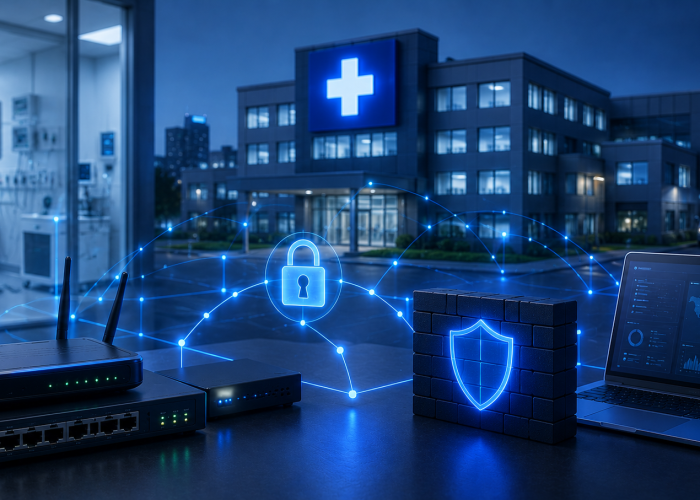
Securing the network edge in healthcare now requires the same level of attention traditionally given to servers, workstations, and Electronic Health Record systems. Routers, VPN appliances, firewalls, remote-access gateways, and internet-connected clinical technologies sit directly between healthcare organizations and the outside world. When these systems are outdated, misconfigured, or poorly monitored, they can become the first step in a much larger cyber incident.
Healthcare organizations rely on network-edge technology to connect clinics, support telehealth, enable remote work, exchange data with partners, and maintain access to cloud applications. These technologies help small and medium-sized healthcare organizations deliver care more efficiently, but they also expand the number of systems attackers can target. Each new connection can become another potential pathway into the environment if it is not properly secured.
For years, many cybersecurity programs focused primarily on laptops, desktops, email systems, and internal servers. Those safeguards remain necessary, but attackers increasingly search for weaknesses in devices that manage traffic, remote access, and communication between internal networks and the internet. Protecting these systems is essential for maintaining patient privacy, supporting HIPAA readiness, and preventing operational downtime.
What Is the Healthcare Network Edge?
The network edge includes the technologies positioned at the boundary between a healthcare organization’s internal systems and external networks. These devices control how traffic enters and leaves the environment, often making security decisions before data reaches internal applications or endpoints. Because they operate at this boundary, they are highly valuable targets for cybercriminals.
Common healthcare edge technologies include routers, firewalls, VPN gateways, secure web gateways, remote-access appliances, wireless controllers, load balancers, and internet-facing management interfaces. Patient portals, cloud connectors, vendor support systems, and some connected medical technologies may also interact directly with edge infrastructure. Together, these systems form the digital entry points through which users, vendors, applications, and data move.
A compromised edge device can give attackers a strategic position inside the network. Instead of targeting each employee separately, a threat actor may exploit one vulnerable appliance and gain access to traffic, credentials, or internal systems. This makes edge security a fundamental part of healthcare cybersecurity rather than a narrow networking concern.
Why Attackers Are Targeting Healthcare Edge Devices
Healthcare organizations are attractive targets because they manage sensitive information and depend on continuous access to technology. Cybercriminals understand that disruptions to scheduling, billing, clinical documentation, and communication can create intense pressure on providers. They also know that many healthcare organizations operate older infrastructure because replacing network equipment can be expensive and disruptive.
Attackers frequently scan the internet for vulnerable routers, unpatched VPN gateways, exposed administrative interfaces, and misconfigured firewalls. These searches can be automated, allowing threat actors to identify thousands of potentially vulnerable systems quickly. A device does not need to be publicly advertised to become visible to an attacker.
Edge technologies may also be overlooked because they often operate quietly for years. If a router continues passing traffic and a firewall appears to be functioning, staff may assume the device is secure. In reality, unsupported firmware, forgotten accounts, or insecure management settings may create serious exposure.
The Growing Role of Remote Access
Remote work and distributed healthcare operations have made VPNs and remote-access platforms central to everyday business. Physicians may access records from multiple locations, vendors may connect for support, and administrators may work from home. These legitimate needs increase the importance of strong access controls at the network edge.
A poorly secured VPN or remote desktop gateway can provide attackers with direct access to internal systems. Stolen passwords, weak authentication, outdated software, and excessive vendor permissions can all increase the likelihood of compromise. Once inside, attackers may attempt to reach identity systems, file servers, billing platforms, or EHR-related resources.
Healthcare organizations should treat remote access as a high-risk service rather than a routine convenience. Every remote-access method should have a documented owner, a defined business purpose, and security controls appropriate to the sensitivity of the systems involved. Access that is no longer required should be removed promptly.
The Hidden Risk of Unmanaged Infrastructure
Unmanaged network infrastructure creates one of the most difficult challenges in securing the network edge in healthcare. Devices may have been installed by previous IT providers, temporary contractors, equipment vendors, or staff members who are no longer with the organization. Over time, those systems can disappear from formal inventories while remaining active and reachable.
A clinic may discover an old VPN appliance still connected to the internet, a router using default administrative credentials, or a firewall managed through an account no one actively monitors. These systems may not receive patches, configuration reviews, or security alerts. Their continued operation creates exposure without providing clear accountability.
Ownership gaps are especially common when responsibility is divided among internal IT staff, managed service providers, internet service providers, and medical technology vendors. Each party may assume someone else is maintaining the device. Clear documentation is essential to prevent network-edge systems from becoming forgotten security liabilities.
How Edge Compromise Can Spread
An attacker who compromises a router, firewall, or VPN appliance rarely stops at the original device. The initial objective is often to establish a foothold that can be used to explore the network, capture credentials, or identify valuable systems. From there, the attacker may attempt to move laterally.
Lateral movement allows threat actors to expand from one system to another until they reach higher-value assets. In healthcare, those assets may include patient records, imaging systems, revenue cycle applications, pharmacy platforms, shared file servers, or identity services. Weak network segmentation makes this movement significantly easier.
Some edge devices also lack the detailed monitoring found on modern endpoints. If logging is limited or not centrally reviewed, malicious activity may remain unnoticed for an extended period. This delayed detection can give attackers more time to prepare ransomware, steal information, or disable recovery systems.
Operational Consequences for Clinics and Medical Practices
A network-edge compromise can affect far more than data confidentiality. Healthcare organizations depend on reliable connectivity to access cloud applications, communicate with laboratories, process insurance claims, and coordinate care. If routers, firewalls, or VPN systems become unavailable, multiple workflows may stop at once.
Operational downtime can force staff to use manual processes, delay appointments, and interrupt access to patient information. Billing and claims processing may also slow, creating financial pressure long after the technical issue is resolved. For smaller clinics with limited staffing, even a short disruption can create a substantial backlog.
Cybersecurity therefore has a direct relationship with patient care continuity. Protecting network-edge infrastructure helps ensure that clinicians can access the information and systems they need. Stronger edge security also reduces the chance that a technical compromise becomes a broader organizational crisis.
HIPAA and Patient Data Protection
The HIPAA Security Rule requires covered entities and business associates to use reasonable safeguards to protect electronic Protected Health Information. Network-edge systems influence the confidentiality, integrity, and availability of that information because they control access to many applications and services. Weaknesses at the edge can undermine otherwise strong internal security controls.
A compromised firewall or VPN appliance may expose ePHI by allowing unauthorized access to internal systems. It may also affect availability if attackers disrupt network connectivity or deploy ransomware. Healthcare organizations should therefore include edge devices in risk analyses, asset inventories, vulnerability management, and incident response planning.
Documentation matters as much as technology. Organizations should be able to identify which edge systems exist, who manages them, when they were last updated, and how access is controlled. These records support better cybersecurity decisions and strengthen compliance readiness.
Maintain a Complete Asset Inventory
The first step in securing the network edge in healthcare is knowing what exists. An accurate inventory should include routers, firewalls, VPN appliances, wireless controllers, internet-facing servers, remote-access tools, and vendor-managed network devices. Each asset should have an assigned owner and documented business purpose.
Inventories should record the manufacturer, model, firmware version, physical or cloud location, management address, support status, and external exposure. Organizations should also document which vendors can access each device and how those connections are authenticated. This information becomes critical during vulnerability alerts and incident investigations.
Asset inventories must be reviewed regularly because healthcare networks change frequently. New locations, temporary projects, vendor deployments, and cloud migrations can introduce systems without formal approval. Continuous discovery helps identify unknown or unmanaged devices before attackers do.
Patch Firmware and Replace Unsupported Devices
Edge devices require regular firmware and software updates just like servers and workstations. Vendors release updates to correct security vulnerabilities, improve stability, and address newly discovered attack techniques. Delaying those updates can leave publicly accessible systems exposed to known threats.
Healthcare organizations should establish clear patching timelines based on risk. Internet-facing vulnerabilities associated with active exploitation should receive urgent attention, while lower-risk findings can follow standard maintenance schedules. Testing and rollback plans help reduce the operational risk of applying updates.
Devices that no longer receive vendor support should be replaced or isolated. Unsupported appliances may continue functioning, but their security risk grows over time because newly discovered vulnerabilities may never be corrected. Budgeting for replacement is an important part of long-term cybersecurity planning.
Strengthen Administrative Access
Administrative interfaces should not be broadly accessible from the public internet. Access should be limited to trusted networks, secure VPN connections, or allowlisted addresses whenever possible. Default usernames, weak passwords, and shared administrator accounts should be eliminated.
Multi-factor authentication should be required for administrative access and remote connectivity. Unique accounts improve accountability by allowing organizations to determine who made a change and when it occurred. Privileges should also be limited so users receive only the access necessary for their responsibilities.
Healthcare organizations should regularly review administrative accounts and vendor credentials. Accounts associated with former employees, previous contractors, or expired support agreements should be removed. Access reviews reduce the chance that forgotten credentials become an attacker’s entry point.
Monitor Network Activity Continuously
Continuous monitoring helps identify unusual behavior before it causes widespread damage. Edge-device logs should be sent to a centralized monitoring platform rather than stored only on the device. This makes it easier to detect repeated login attempts, unexpected configuration changes, and abnormal outbound traffic.
Security teams should establish alerts for events such as new administrator accounts, disabled logging, unusual remote sessions, and connections from unexpected locations. Network traffic patterns can also reveal compromised devices communicating with malicious infrastructure. Early detection allows organizations to investigate and contain suspicious activity faster.
Monitoring should include vendor-managed systems and remote-access sessions. Organizations need visibility into when third parties connect, which systems they access, and whether their behavior matches approved activity. Vendor access should never be treated as inherently trusted.
Use Network Segmentation to Limit Damage
Network segmentation separates critical systems from general business devices and public-facing services. If an attacker compromises an edge device, segmentation can prevent unrestricted movement across the environment. This containment reduces the potential impact of a breach.
Clinical systems, administrative applications, guest Wi-Fi, medical devices, and vendor connections should not automatically share the same level of network access. Access rules should be based on operational need and sensitivity. Systems containing ePHI should receive additional protection.
Segmentation also supports incident response by making suspicious traffic easier to identify and isolate. A compromised workstation should not be able to communicate freely with every server or medical device. Carefully designed boundaries create more opportunities to stop an attack.
Conduct Vulnerability Assessments and Penetration Testing
Routine vulnerability assessments help identify outdated firmware, exposed ports, insecure protocols, and weak configurations across network-edge devices. These assessments should include both known assets and externally discoverable systems. Findings should be prioritized according to exposure, exploit activity, and operational impact.
Penetration testing adds a deeper level of validation. Rather than only identifying potential weaknesses, testers determine whether those weaknesses can be used to gain unauthorized access or reach sensitive systems. This helps healthcare organizations understand real attack paths.
Testing should occur after major network changes, new clinic openings, VPN deployments, firewall replacements, and vendor integrations. Retesting after remediation verifies that the weakness was actually corrected. The goal is not simply to produce a report but to reduce measurable exposure.
Secure the Edge Before Attackers Reach the Network
Securing the network edge in healthcare requires continuous visibility, disciplined maintenance, strong identity controls, and clear ownership. Routers, VPNs, firewalls, and connected infrastructure should never be treated as passive equipment that can operate indefinitely without review. These systems are active security controls and must be managed accordingly.
Healthcare organizations that inventory their assets, patch devices, restrict administrative access, monitor activity, and segment critical systems can significantly reduce cyber risk. These practices support HIPAA readiness, patient data protection, ransomware prevention, and business continuity. A stronger network edge creates a safer foundation for every system behind it.
The strongest defense begins before an attacker reaches the internal network. Follow Tempest Healthcare IT on LinkedIn for practical guidance on healthcare network security, penetration testing, vulnerability management, HIPAA cybersecurity, and protecting small and medium-sized healthcare organizations.